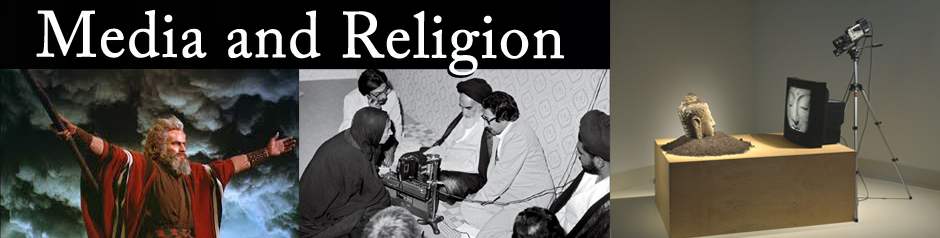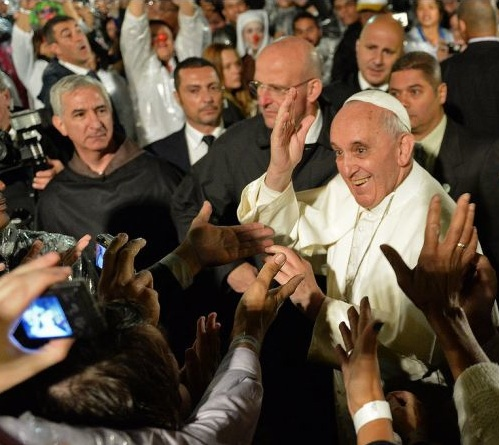
Francis has been much better received in Brazil than his predecessor was, but can he restore the church’s dominance?
GlobalPost reports on the pope’s visit to Brazil as part of its Luce-supported Special Report, A Global Church.

Francis has been much better received in Brazil than his predecessor was, but can he restore the church’s dominance?
GlobalPost reports on the pope’s visit to Brazil as part of its Luce-supported Special Report, A Global Church.
Among the recent articles on the election of Israel’s Chief Rabbis, the Los Angeles Times’ piece by Edmund Sanders did the best job of explaining why a seemingly ceremonial position has political importance. As Sanders rightly notes, the Chief Rabbis, one for the Ashkenazi community and the other for the Sephardim, control thousands of jobs at state-run religious institutions. They also have legal oversight and control over marriage and divorce, women’s rights, conversion, and kosher certification. Rabbinical control over marriage means that possibilities open to American Jews– civil marriage for one, are closed to their relatives in Israel. As a result, notes the NYTimes, “as many as one third of Israeli couples marry abroad or live together without marrying rather than follow the rabbinate’s strictures.” Earlier this summer, another example of the Chief Rabbis’ power–this time over the right of women to pray at a holy site –resulted in a melee at the Western Wall when ultra-Orthodox Jews tried to break up a monthly women’s prayer service. Also at issue is “who is a Jew?” and therefore entitled to citizenship. For many Russians, Ethiopians, and other immigrants who claim to be Jewish, the rabbinate demands proof of lineage which is not always available. While some well-off Russians can hire detectives, that’s not a possibility for most.
Both the LATimes and the NYTimes end their articles with kickers about the viability of a Jewish and democratic state. Next time that should be the nut graf.
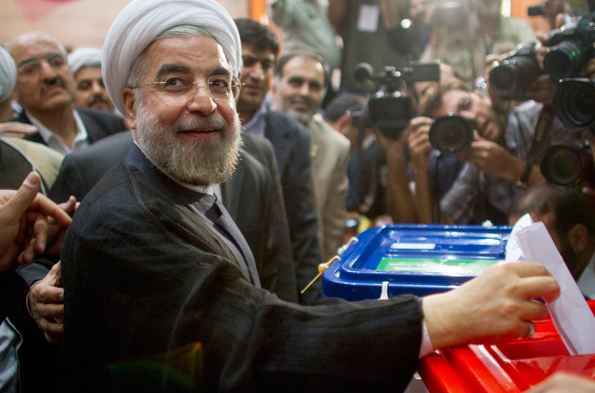
America Abroad recently partnered with a leading public radio station in Los Angeles, KCRW, to host an international radio town hall – Iran at the Crossroads – on the country’s latest presidential election.
The discussion brought together a panel of experts and Iranian diaspora communities in Los Angeles and London, as well as people inside Iran via Skype and social media.
The conversation explored what Iran’s new leadership means for the future of the country, its nuclear weapons program and relationship with the West, and for Iranians around the world.
The town hall was co-hosted by America Abroad’s Madeleine Brand and BBC Persian Service anchorwoman Pooneh Ghodoosi.
See more at Iran at the Crossroads.
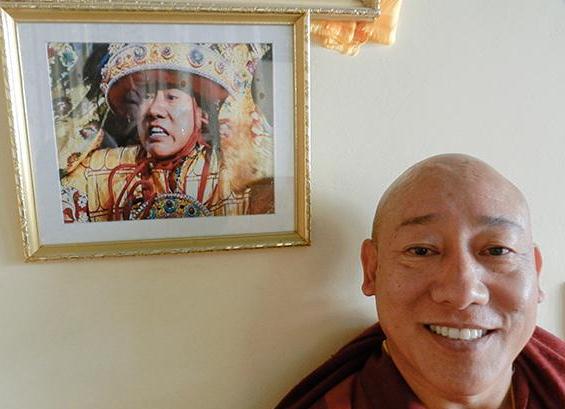
Thupten Ngodup, the medium through whom the oracle Nechung speaks to Tibet’s leaders. Image by Jeffrey Bartholet, India, 2013.
Jeffrey Bartholet reports on Tibet’s National Spirit Advisor for the Pulitzer Center on Crisis Reporting.
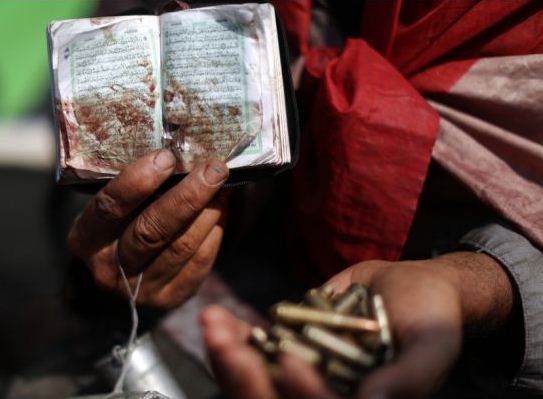
Left staggering and angry by a series of arrests, the once-powerful Muslim Brotherhood now faces the most critical period in its 85-year history, analysts say.
GlobalPost reports on Egypt in Crisis.
Visit CLALS home page for Religion and Violence in Latin America to find non-scholarly short pieces, white papers, working papers, reviews, news articles, and multimedia produced as a result of and in association with the Center’s project “Religious Responses to Violence in Latin America,” a multi-year research endeavor supported by the Henry Luce Foundation.
The El Salvador Gang Truce and the Church: What is the Role of the Catholic Church by Steven Dudley
This white paper is one of a series produced by American University’s Center for Latin American and Latino Studies’ multi-year project of research and structured dialogue on religion and violence in Latin America. In light of the consequences of criminal violence for the region’s democracies, the project seeks to better understand how religious actors are responding today, when they are less prominent than during the previous period of political, largely state-sponsored violence. Fresh research on Brazil, Chile, Colombia, El Salvador, Guatemala, Mexico and Peru allows comparative analysis between different countries as well as past and present. These studies will be published as a scholarly volume.
Project white papers aim to bridge and catalyze dialogue between scholarly and policy communities, religious practitioners and human rights activists. They are designed to inform the ongoing efforts of religious leaders, policymakers and advocates in civil society who seek effective strategies to diminish violence in contemporary Latin America and empower its victims.
Research scholar in residence Alexander Wilde co-directs the project with CLALS Director Eric Hershberg and University Chaplain Joseph Eldridge. The project is supported by the Henry R. Luce Initiative on Religion and International Affairs of the Henry Luce Foundation.
For ongoing project developments, see:
http://www.american.edu/clals/Violence-and-Victims.cfm
Religion and International Affairs: Through the Prism of Rights and Gender is not committed to any single answer to these questions or any particular account of the interrelations of rights, religion, and gender as they play out in international affairs. Rather, it provides the intellectual context, cross-disciplinary exchanges, and resources to address these issues more fully and deliberately than popular discourse or any single disciplinary approach can do. The project will explore the intersections of religion and international affairs through the prism of rights and gender through the following programs and activities: faculty seminar, visiting schoalrs and practitioners, Luce international fellows, interdisciplinary graduate seminars, research awards, and an international workshop.
Visit the Religion and International Affairs: Through the Prism of Rights and Gender website.
View the Religion and International Affairs: Through the Prism of Rights and Gender booklet.
Based in the school’s Global Theory and History Program, the GPRI is supported by a generous grant from the Henry Luce Foundation. The initiative has three main components that incorporate the study of the interaction between religion and politics into the school’s existing academic programs—new master’s degree courses, research seminars and executive education training sessions. GPRI’s goal is to foster an appreciation and deeper understanding of religion and international affairs among students, scholars and practitioners who will shape and influence future policymaking.
Visit the Global Politics and Religion Initiative website
The Berkley Center’s Religion and Global Development program, in close collaboration with the World Faiths Development Dialogue (WFDD), tracks the engagement of religious communities and faith-inspired organizations around global policy challenges and brings together stakeholders to examine best practices and advance collaboration.
Visit the Religion and Global Development program website.